
Avalon Jewels
Avalon Jewels is easily among the more engaging match-three puzzle games I’ve played, largely because it understands very well where satisfaction in the genre truly comes from: easily being able to create multi-gem matches, watching cascading effects unfold, levels that usually take a couple of minutes to complete, and introducing just enough mechanical variety to prevent the gameplay from becoming a repetitive grind.
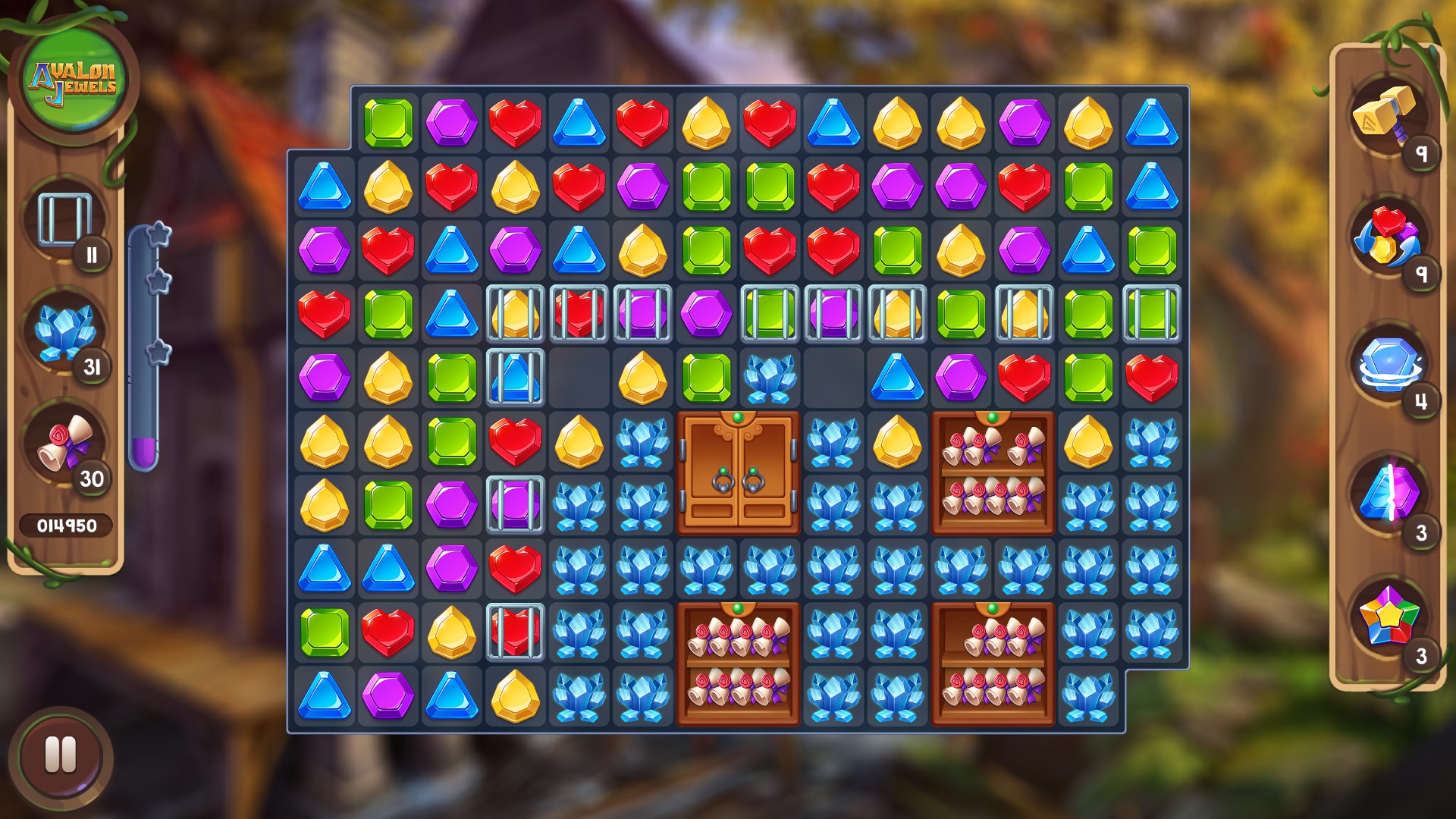
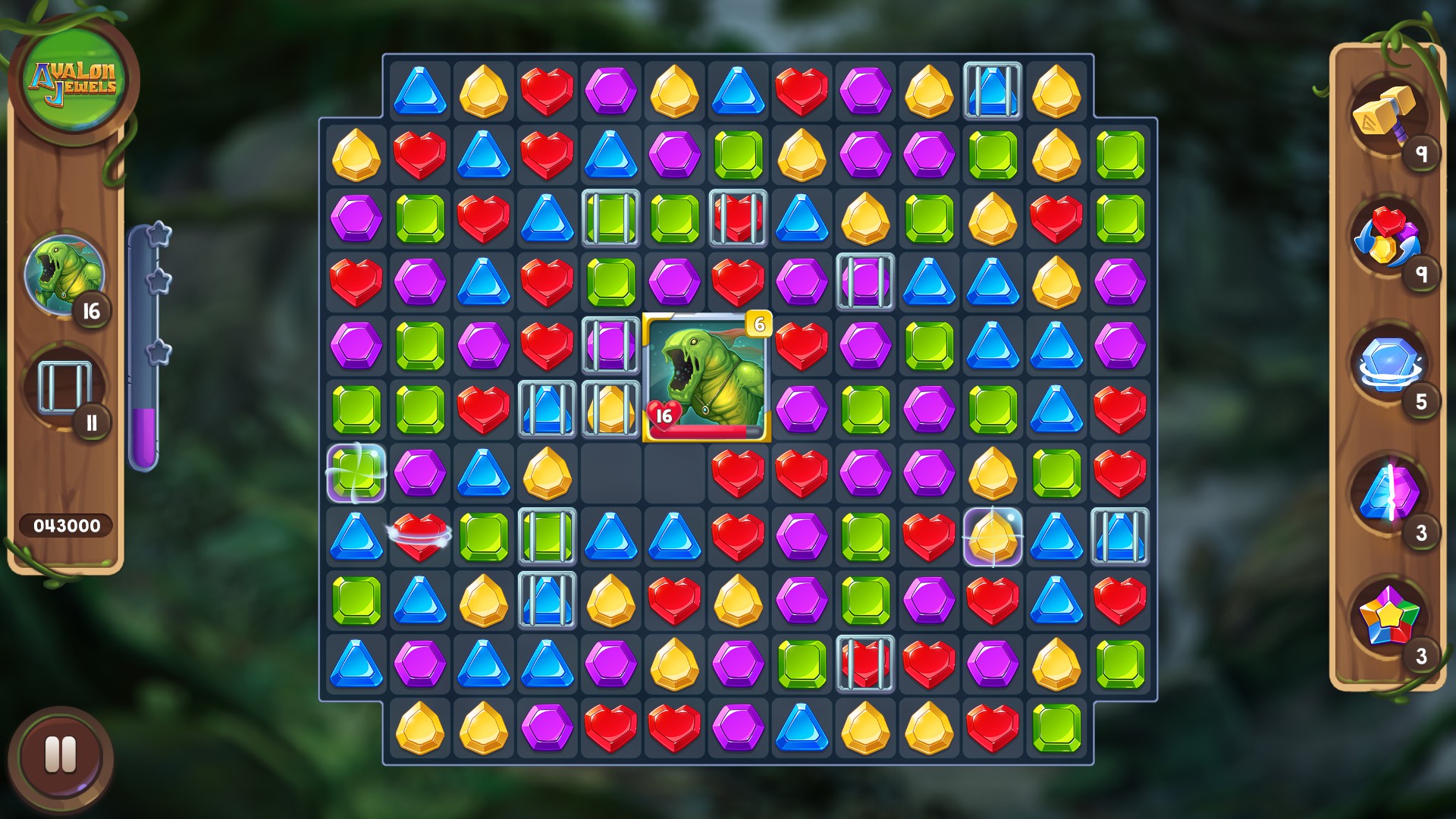
The game is fairly lengthy, containing 250 levels that keep things fresh due to new mechanics being added every few stages. Instead of simply increasing difficulty, subsequent levels remix these mechanics in fun ways. Most of them combine two, three, or even four mechanics at once, forcing you to constantly switch your priorities when matching gems, depending on the current setup. Therefore, each level feels unique, rather than a reskin of a previously solved layout. The game also alternates between more relaxed levels and more challenging ones that require extra planning. Some also contain fun boss battles, where the boss’s track patterns involve spawning new locked tiles every few turns.
From a gameplay perspective, Avalon Jewels is exactly what you’d expect from the genre. Matching four or more gems creates super gems that clear rows, columns, or explode an area around them. Matching five creates diamond gems with powerful effects: when combined with a normal gem, they eliminate every gem of that color on the board; when combined with another super gem, they propagate that super effect across all gems of that color, creating chain reactions, explosions, and laser beams that are extremely satisfying to watch.
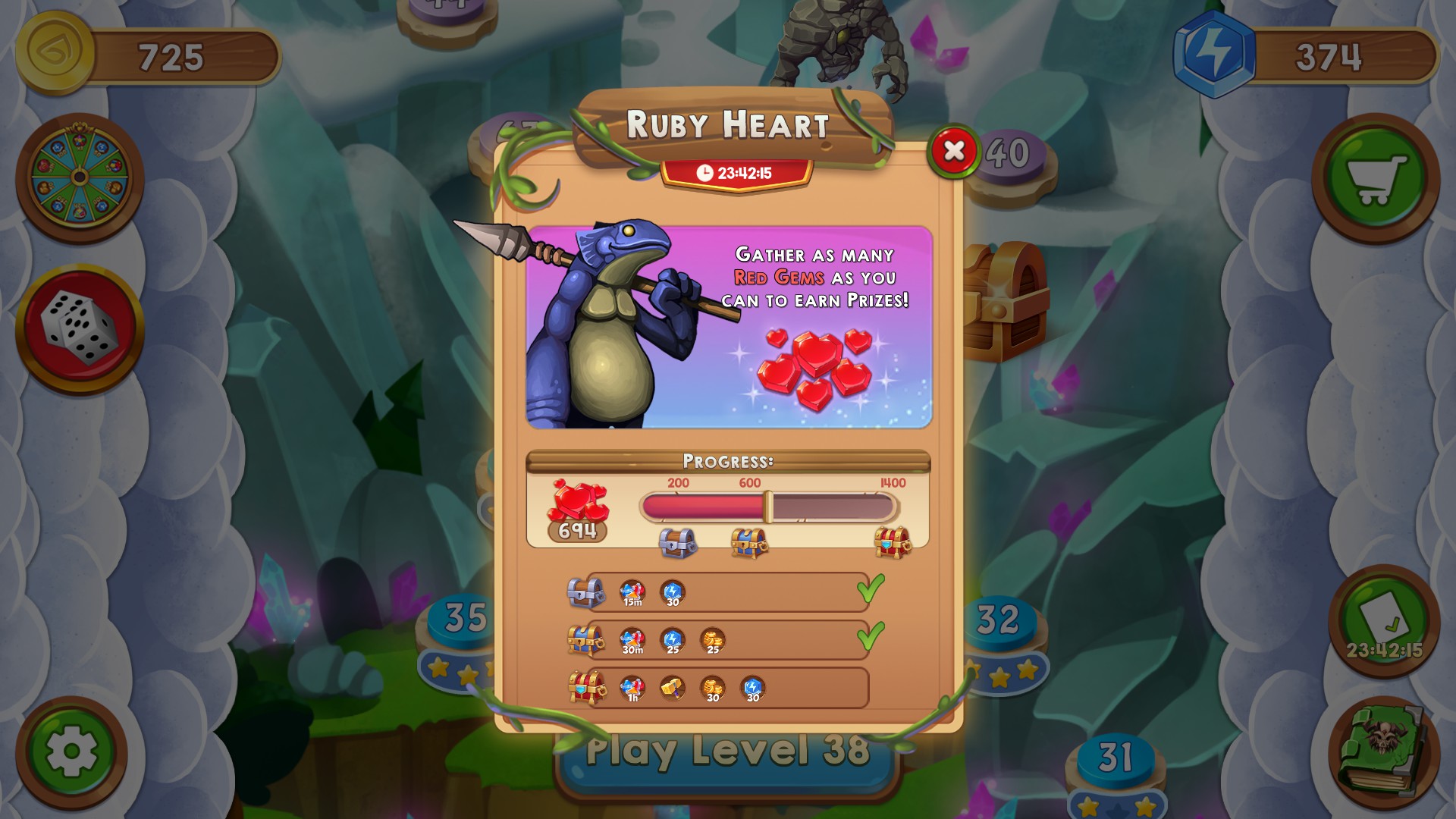
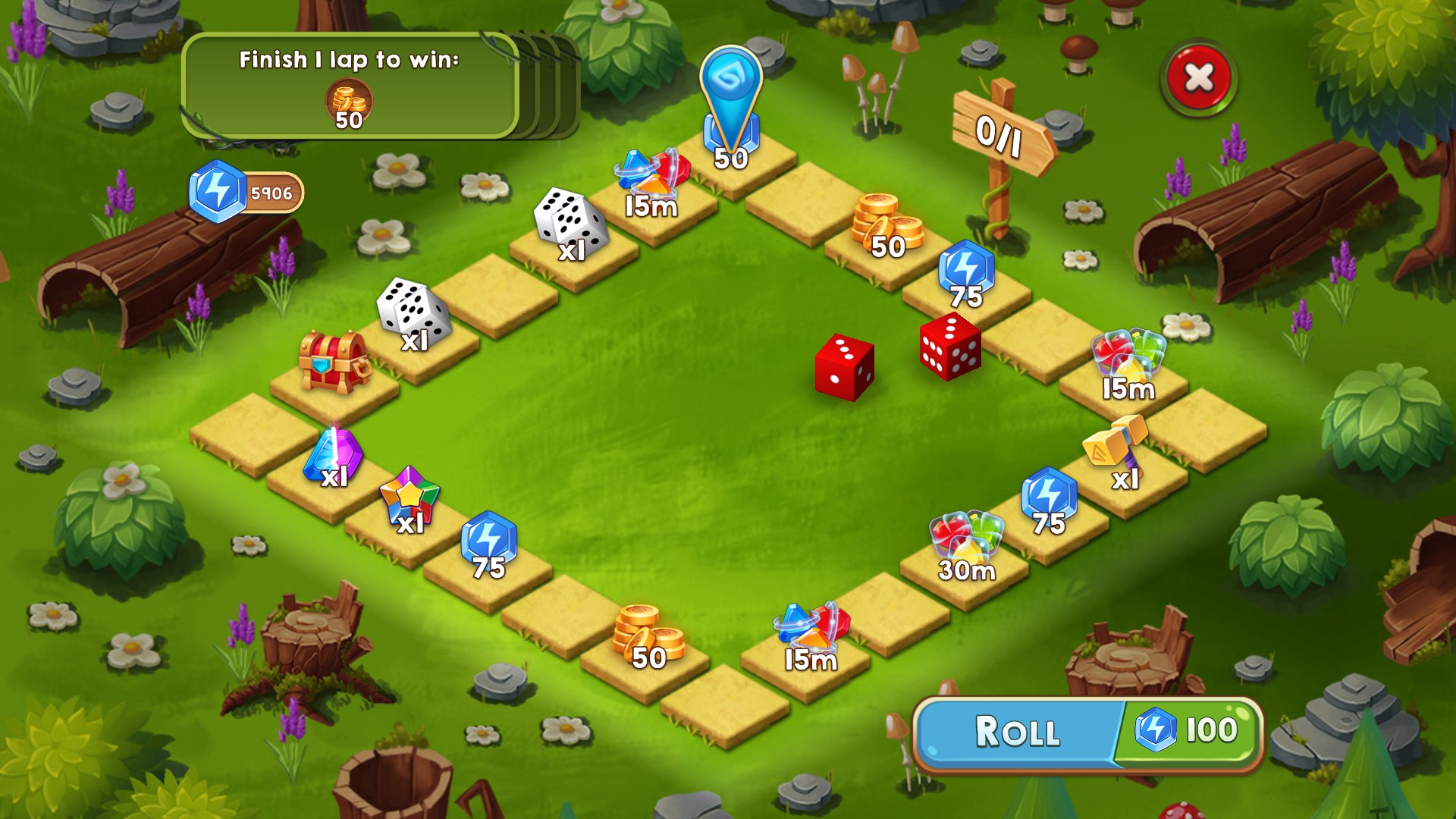
Aside from the standard match-3 gameplay, there are a few extra mini-games that you can engage in: a roll-and-move dice mini-game with rewards and a fortune wheel with various prizes. Time-limited quests also exist (for example, requiring you to match a number of gems of a specific color within a set timeframe), encouraging you to play several levels in succession to meet their objectives. These extras add some fun variations to the match-3 levels, though they’re clearly secondary to the core experience.
The weakest aspect of Avalon Jewels is its economy, which is in dire need of some balancing. There are two main currencies: coins, used to purchase power-ups, and mana, which is mainly required to access the mini-games. While there are multiple ways to earn both, the rewards remain very low throughout. Completing levels primarily grants small amounts of mana and no coins at all. Coins can be obtained only from chests, mini-games, or quests, but they rarely feel sufficient to meaningfully stock up on power-ups.
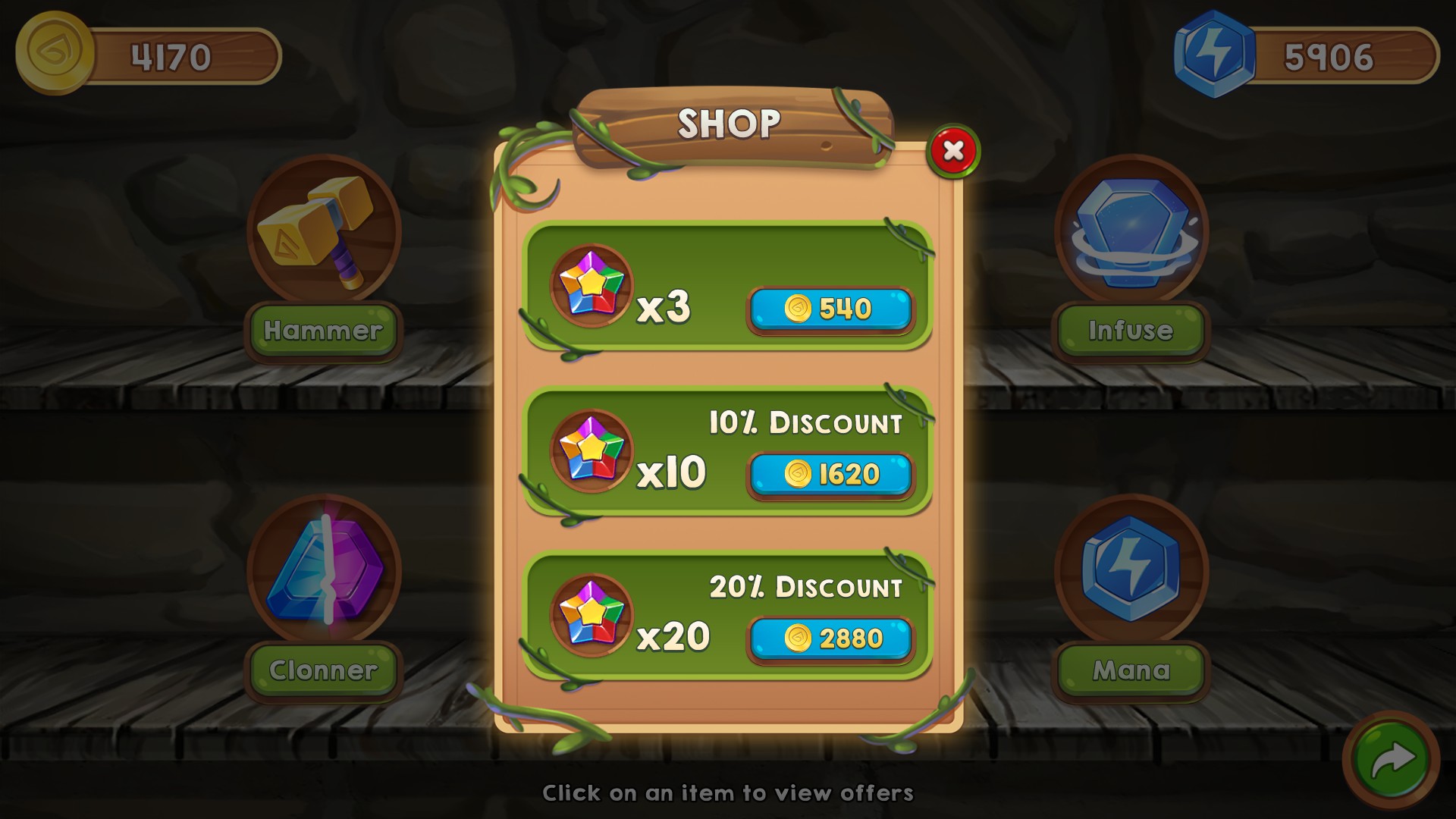
As a result, power-ups feel very expensive. Over the course of the entire 250-level campaign, I was able to purchase only around 30 meaningful power-ups. In normal mode, where moves are limited, this feels very restrictive. The game does allow you to buy extra moves when you run out of them, but doing so requires spending several levels’ worth of mana just to gain five additional moves. In relaxed mode, where the moves are infinite, this is less of an issue, as you can always compensate for the lack of power-ups by creating additional matches, but even then, certain board layouts make them very much needed.
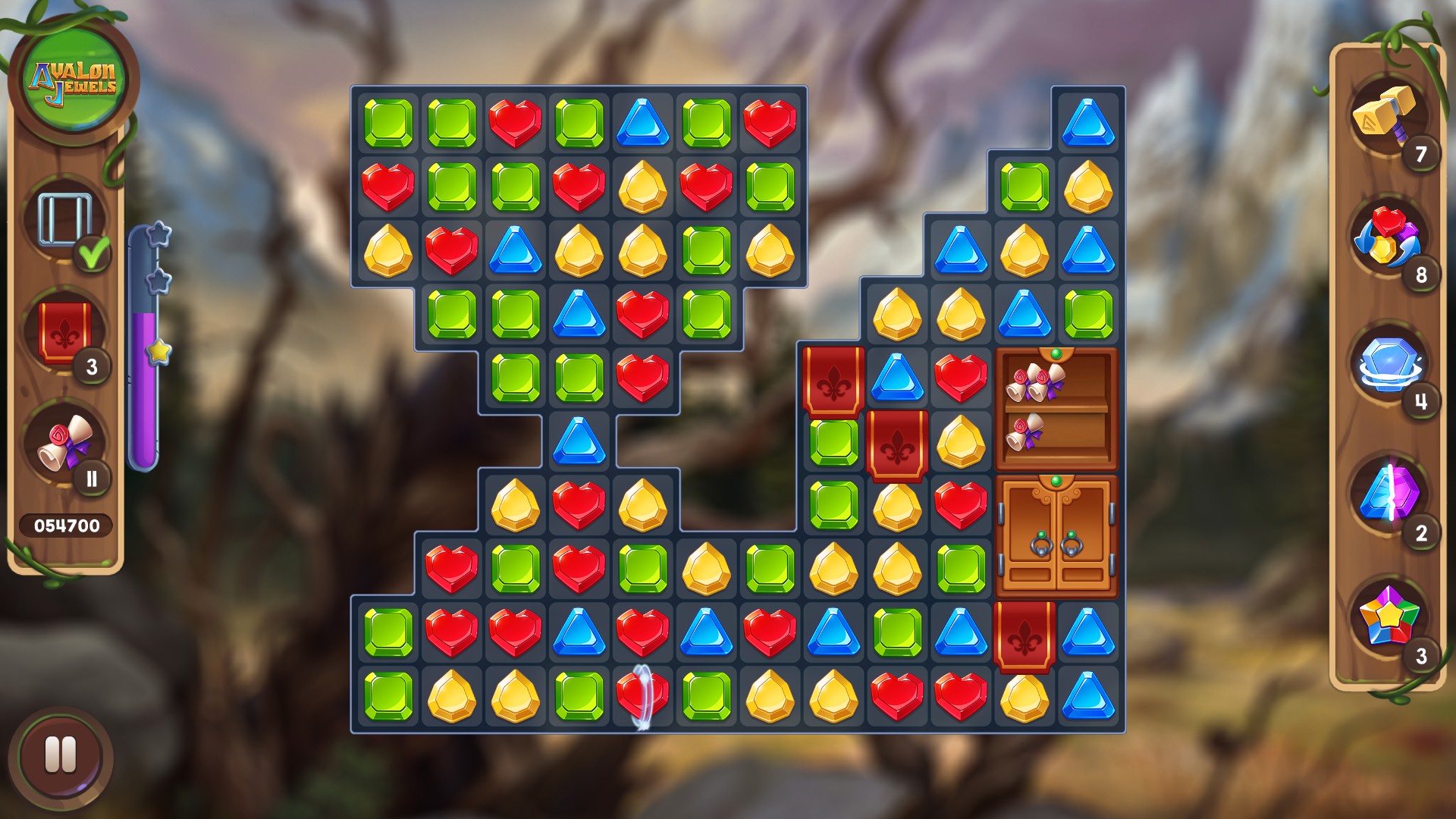
Despite these few drawbacks, Avalon Jewels remains a great match-three game with strong mechanics and a clever level design that provides enough variety to stay interesting across its ~20h of gameplay. The core experience is extremely pleasant from start to finish, also due to the satisfying visual effects of the chain reactions and laser beams.
Other articles that you might like:
1 thought on “Avalon Jewels”
Comments are closed.
[…] Edition is, at its core, very similar to Avalon Jewels, which I previously reviewed here. The match-3 mechanics are exactly the same, but they now received a pirate-themed reskin. There […]