
Homgard
Homgard is a story-driven nonogram game set in a tech-fantasy world that has already met its end. The heroes who could have saved it are all asleep, and you alone are left to restore it by tracking down several scattered mana cores. You navigate a fully hidden grid map square by square, gradually uncovering what lies beneath: nonogram puzzles of varying sizes, empty spaces, special tiles that unlock new regions, and teleporters that move you to distant corners of the map. Completing each puzzle doesn’t just clear a square. It reveals the squares around it and surfaces a memory snippet of the world that Homgard once was. It’s a simple yet very addictive loop that makes the game very hard to put down.
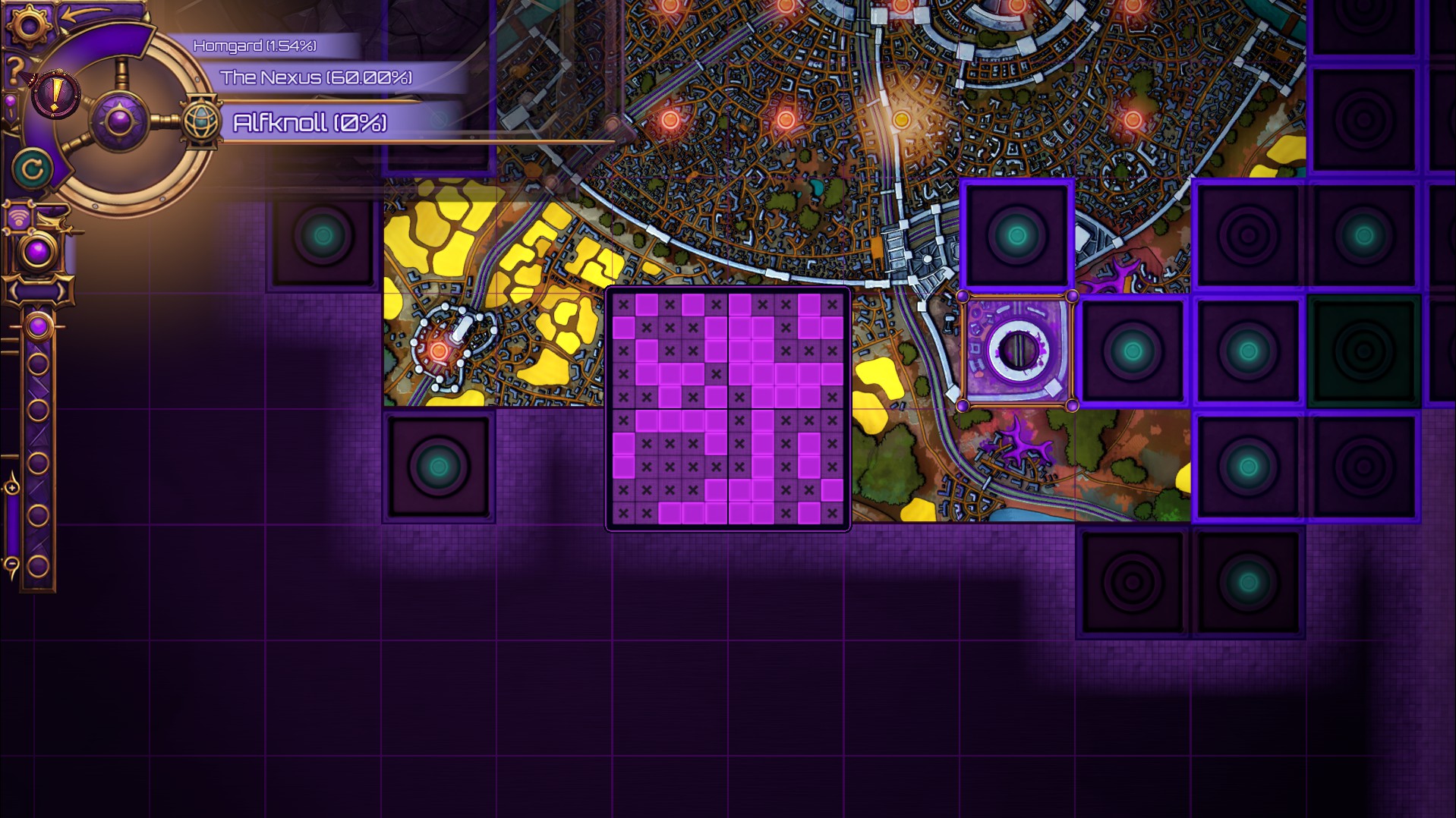
The memories are where the game’s storytelling lives, and they form one of the richest lore collections I’ve encountered in an indie game. Random letters exchanged between citizens, science reports, historical records, diary pages, and various transmissions or transcriptions each constitute one small fragment of a much larger picture. Reading them is entirely optional, but skipping them means you’ll not be able to truly understand what actually happened to this world. Despite the information being scattered throughout hundreds of short text snippets, the story unfolds rather sequentially. As you uncover region after region, the lore traces a loose timeline that mirrors your exploration, like peeling back the layers of an onion down to its core. Alongside the historical thread, the flavor memories add a wonderful layer. These are personal or sometimes peculiar vignettes that don’t advance the plot but give you a vivid sense of how spirited and vibrant Homgard once was. The standout is the Gossip Gazette: a recurring in-world tabloid with gossipy articles bursting with wit and humor and easily the most entertaining read of all these lore bits. The writing is so palpable that you can almost hear the author’s squeaky and dramatic voice over an imaginary radio, making the apocalypse 400% louder.
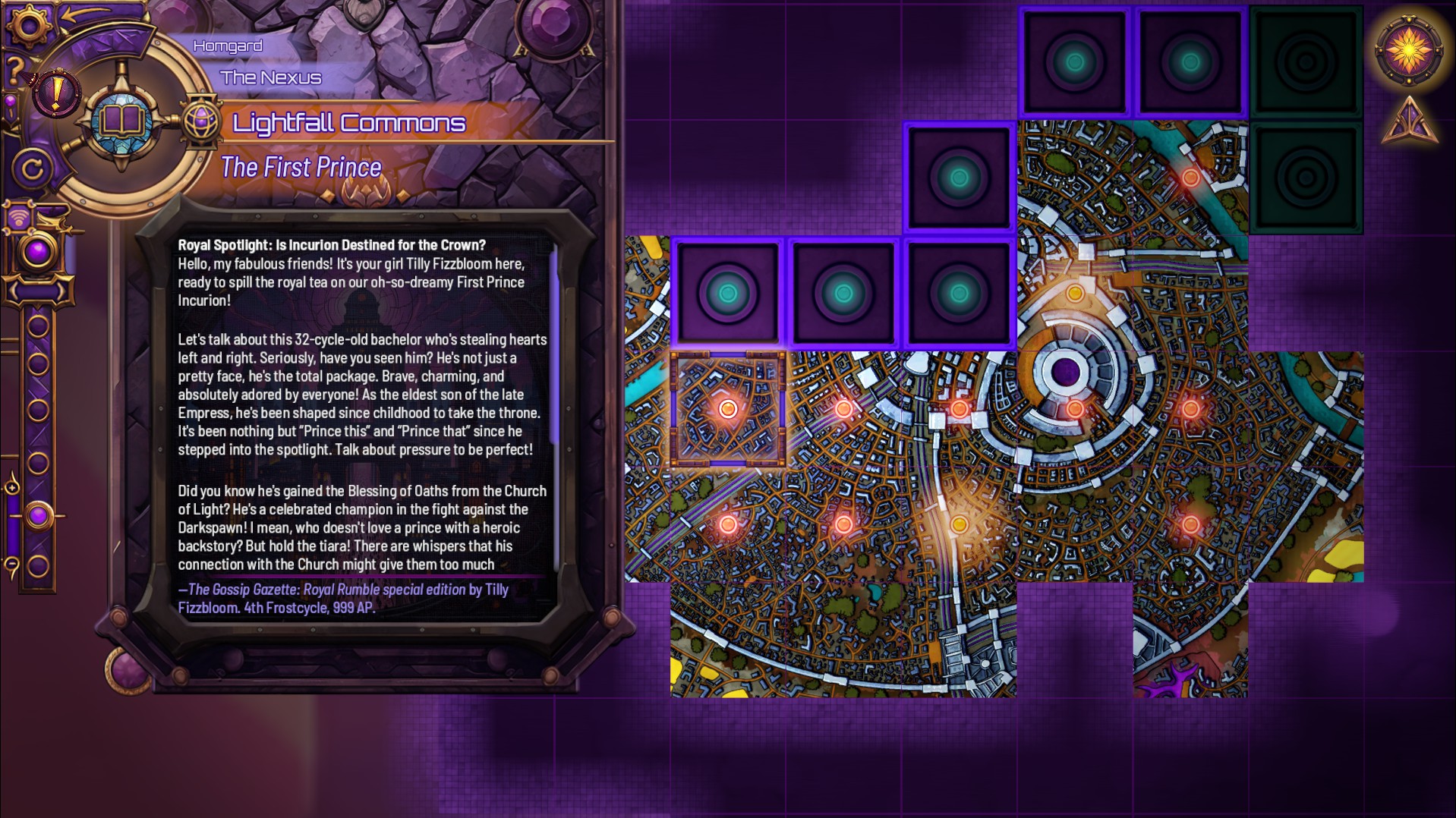
On the other hand, the world-building is so impressively dense that the absence of a character compendium is quite noticeable. With so many names, characters, relationships, and backstories scattered across hundreds of memory fragments, keeping track of who’s who and how they connect can become a real challenge, and it’s the one feature I found myself wishing for most.
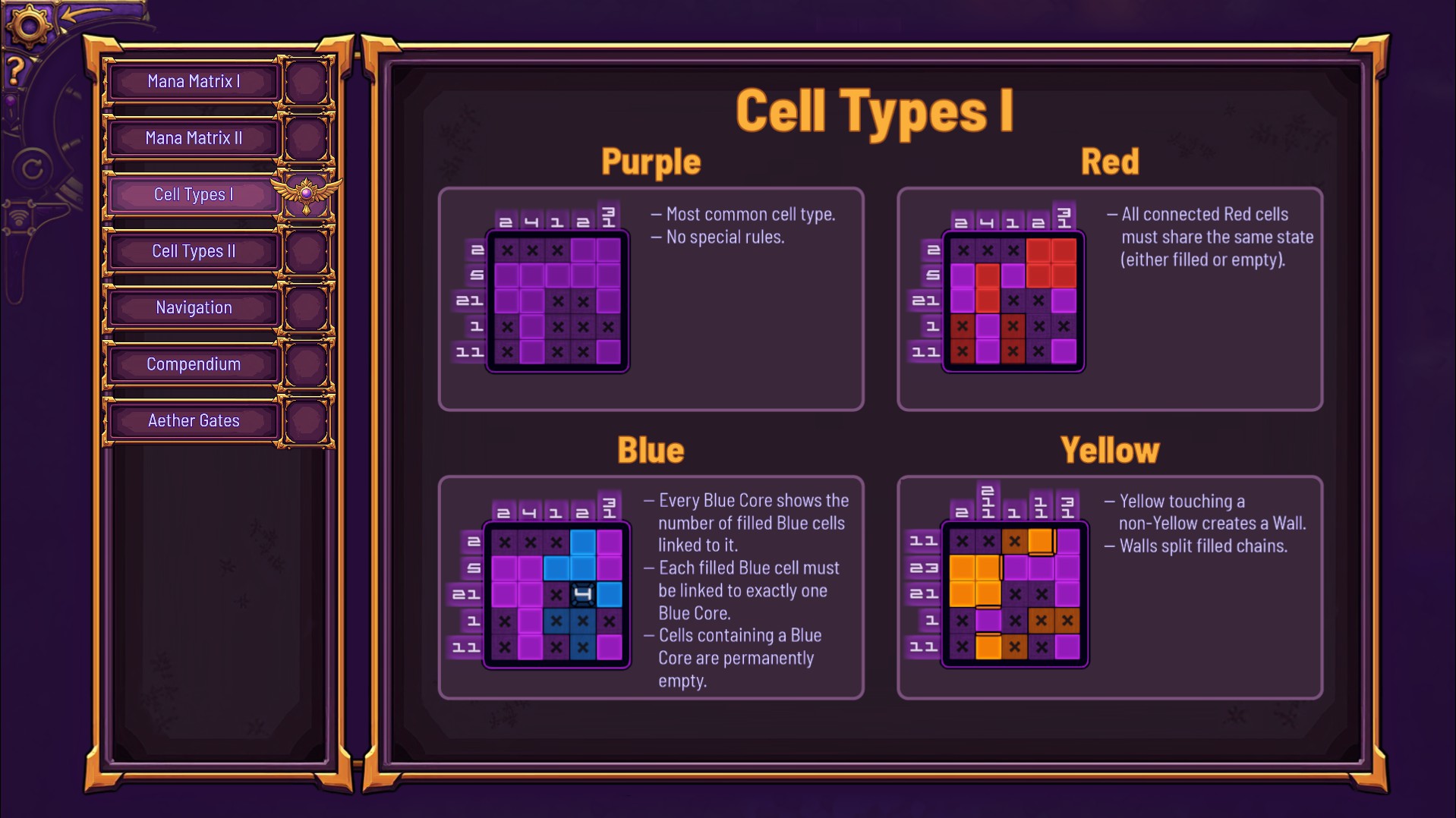
The ~700 puzzles are handcrafted and just as well designed. They scale beautifully in difficulty, from friendly 5×5 grids to multi-section giants that will have you scratching your head for a good while. There are six new colored cell mechanics, and each of them expands the classic nonogram formula in brilliant ways. Having played quite a few nonogram games, I can say with confidence that I haven’t come across anything like them before.
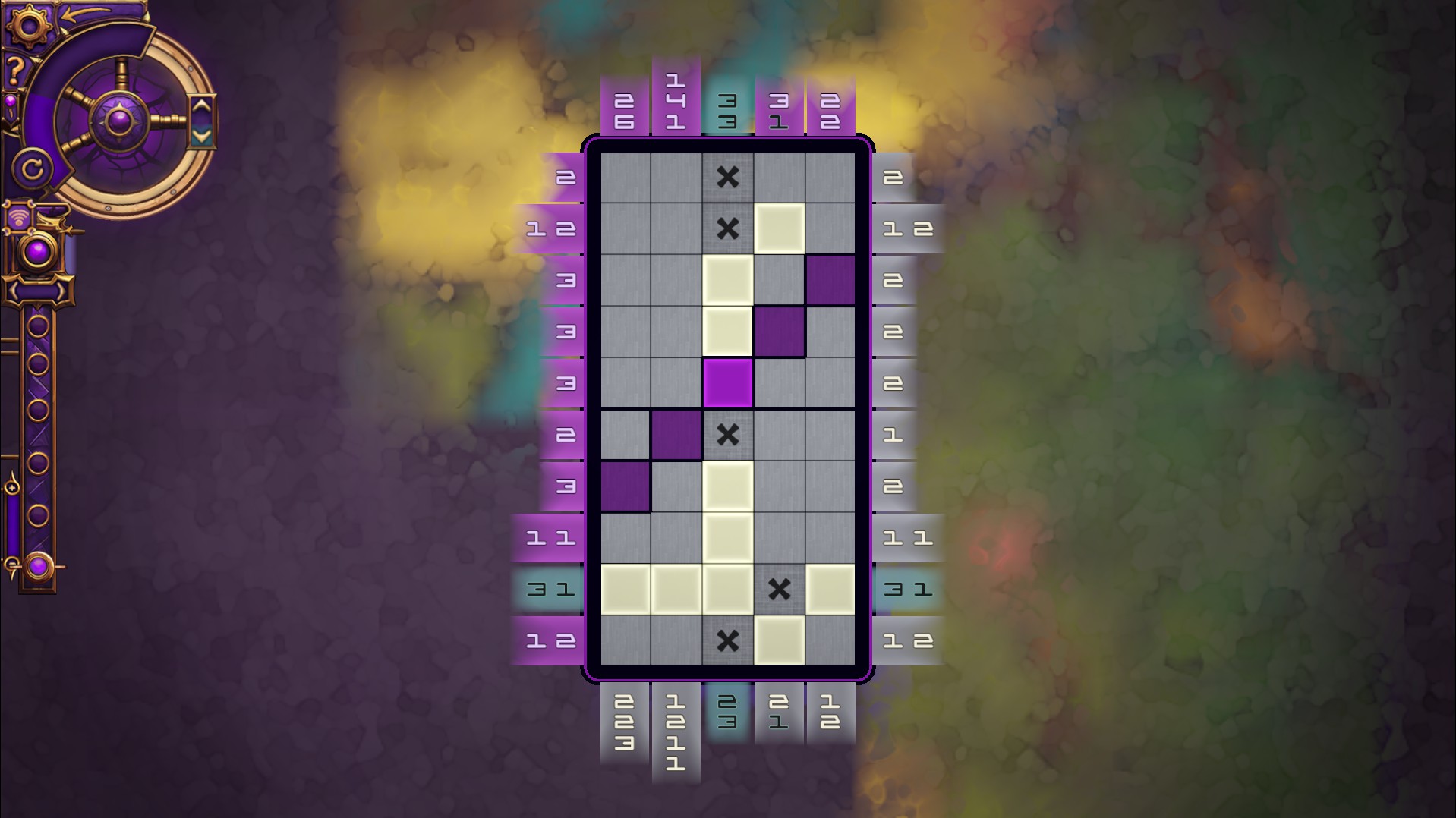
Each of these mechanics forces you to rethink your entire solving approach. A filled green cell, for instance, must always be connected to other non-green filled cells; any red cell must share its state (filled / unfilled) with all the other connected red cells; white cells follow the regular column / row hints of the puzzle, but they have an extra set of their own, helping you narrow down which of the cells from that column / row are filled / unfilled. Relying on row and column number logic alone simply won’t cut it anymore; the state of certain cells can only be determined by applying the rules of whichever color type you’re facing.
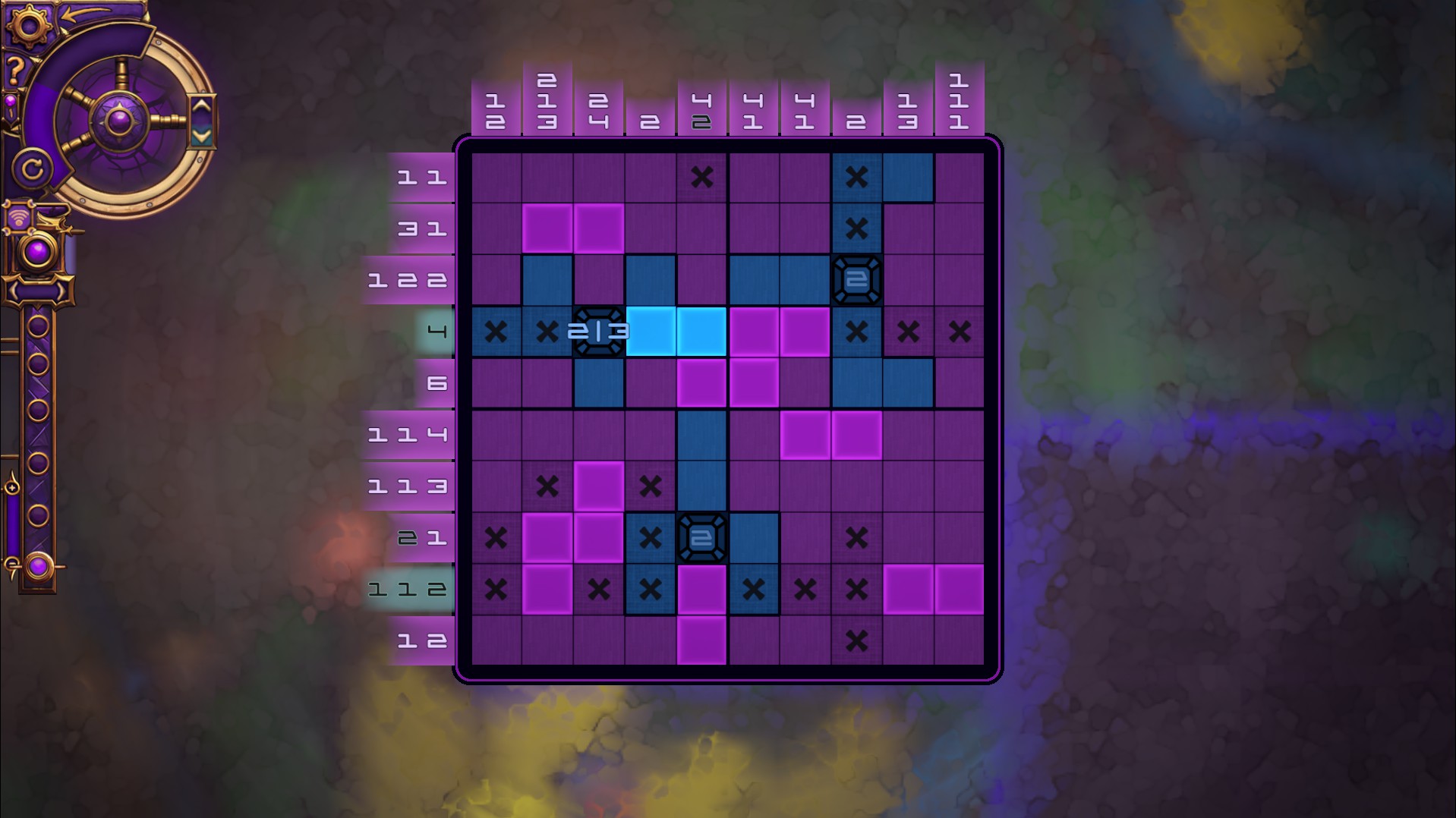
On the quality-of-life front, Homgard also offers a bunch of useful features that you can toggle off from the settings menu if you want your puzzles to be more challenging. Completed rows and columns automatically fill with Xs, and row/column numbers gray out once their constraint is satisfied. A cell counter helps when marking large blocks. Also, puzzles save their state independently, so you can juggle several at once and pick up any of them right where you left off. The one sore spot is the lack of a hint system. If you hit a wall, you’re on your own, and the puzzles featuring the new colored cell mechanics could benefit from some guidance, at least until you’ve had enough time to internalize them. On the other hand, as expected from nonogram puzzles, every one of them is solvable through pure logic, including the ones with the new mechanics. The game also includes an in-world radio with six stations, each with its own distinct vibe. The tracks are all extremely pleasant to listen to and help you deeply relax your mind while puzzling. Steam achievements may be added in a future update. According to the devs, if achievements are implemented, they will be retroactive and progression-based, meaning you won’t need to replay any content to earn them for your current progress.
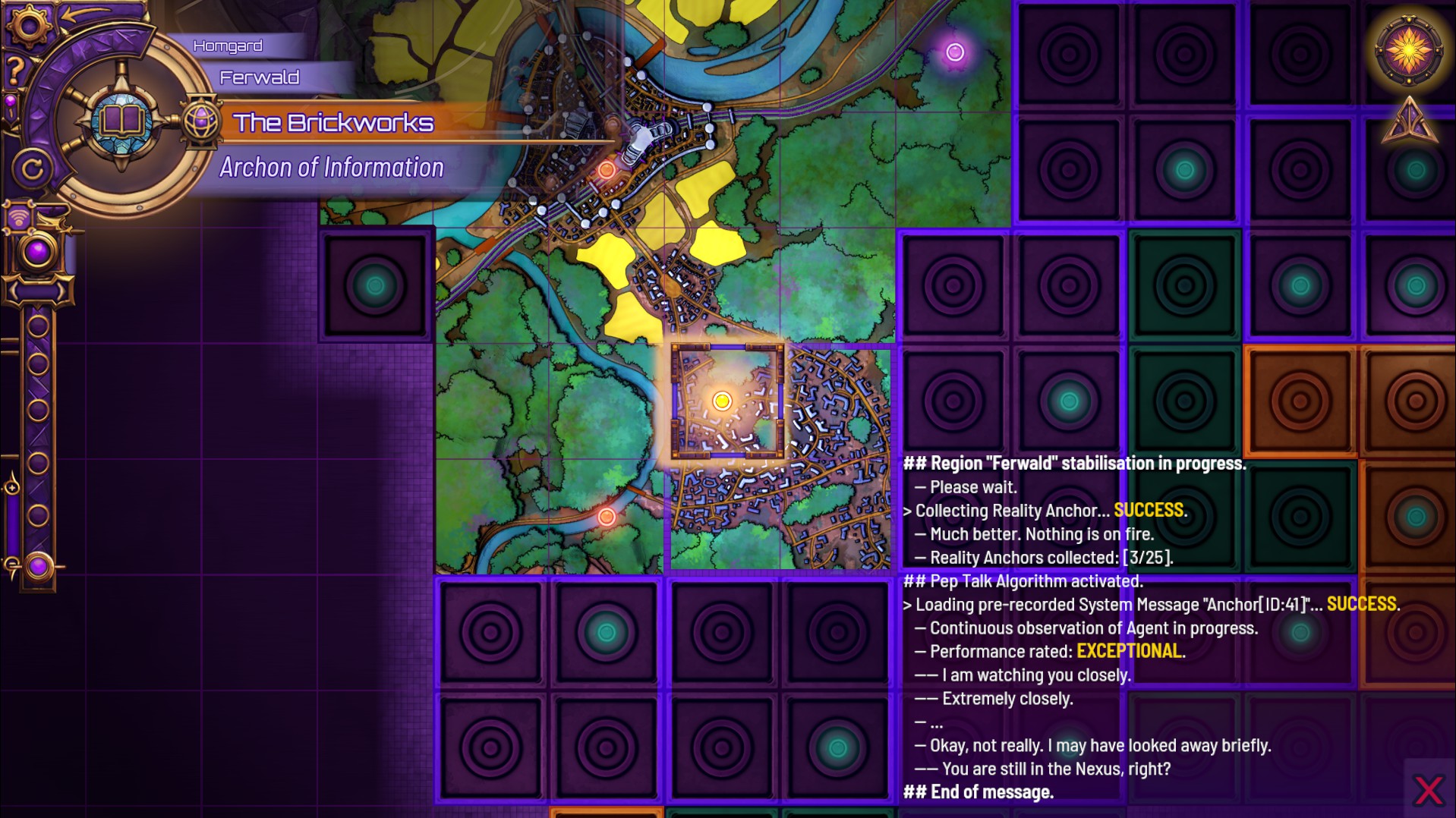
Homgard is a massive game. I would roughly estimate completion to take around 100 hours (based on my 5% completion of the word at the time of writing this review). It is, without exaggeration, one of the most exceptional nonogram puzzle games and an absolute must for nonogram fans and story lovers alike. And according to the store page, this is only the first chapter of a planned four-part series (to be seen in what way the rest will be integrated).