
命运之轮(序章)/Journey of Destiny(dependent origination)
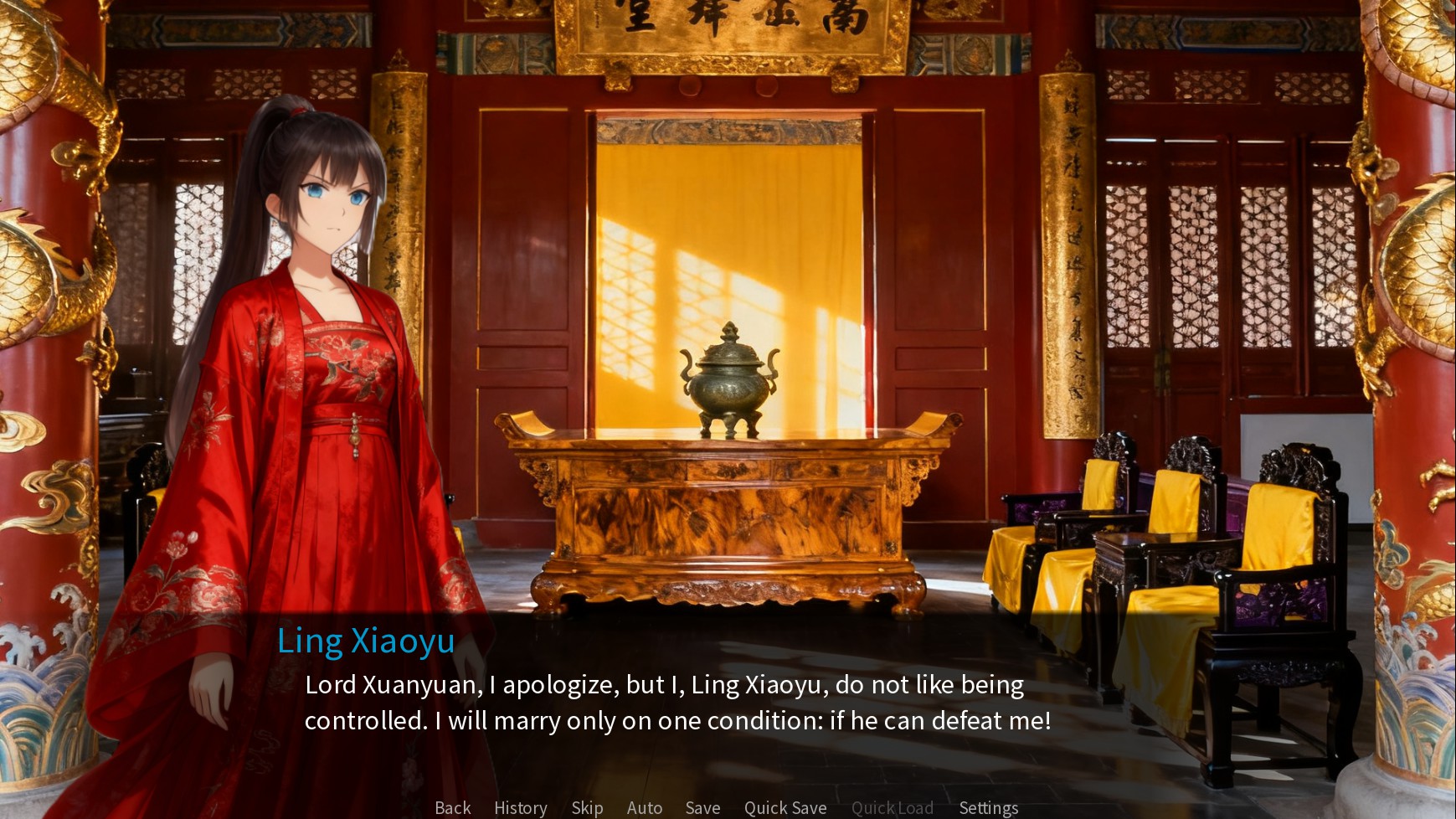
As a big fan of xianxia shows, I had never actually played a xianxia visual novel before, mostly because they are incredibly rare on Steam. When I came across Journey of Destiny: dependent origination, I was very excited to dive in, and it absolutely met my expectations. It is a fascinating read, filled with rich lore and classic cultivation tropes. Even though the CGs are AI-generated due to budget constraints, they are well-designed and do a great job of enhancing the experience. Remarkably, this game was developed in Ren’Py by a single person with no budget, yet it serves up 10 to 12 hours of deep storytelling and good writing.
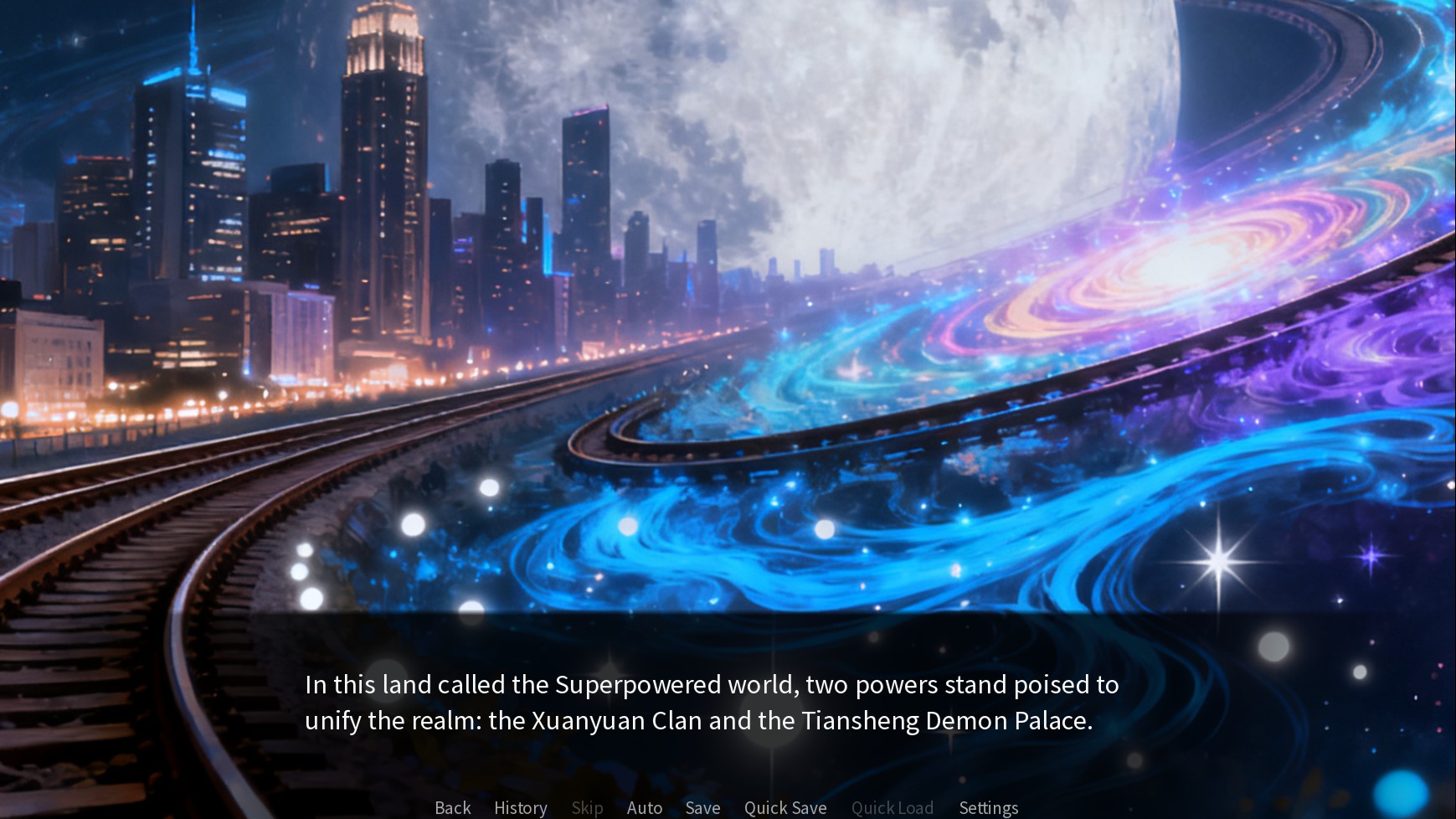
The game takes place in a parallel, superpowered world where cultivation rank and spiritual power mean everything. For many years, two massive factions have rivaled to be the most powerful of all clans: the Xuanyuan clan and the Tiansheng Demon Palace.
Right from the start, you are presented with a choice between four different routes, focusing on the young heirs of the two major clans and two secondary characters from other clans. You experience the narrative strictly from your chosen character’s perspective, and you get to access their distinct inner thoughts. While the story’s core milestones and major encounters happen across all playthroughs and essentially consist of events where these characters meet and interact with each other, each route features a lot of other exclusive scenes that detail what happened behind the scenes within each specific clan or with a specific character.
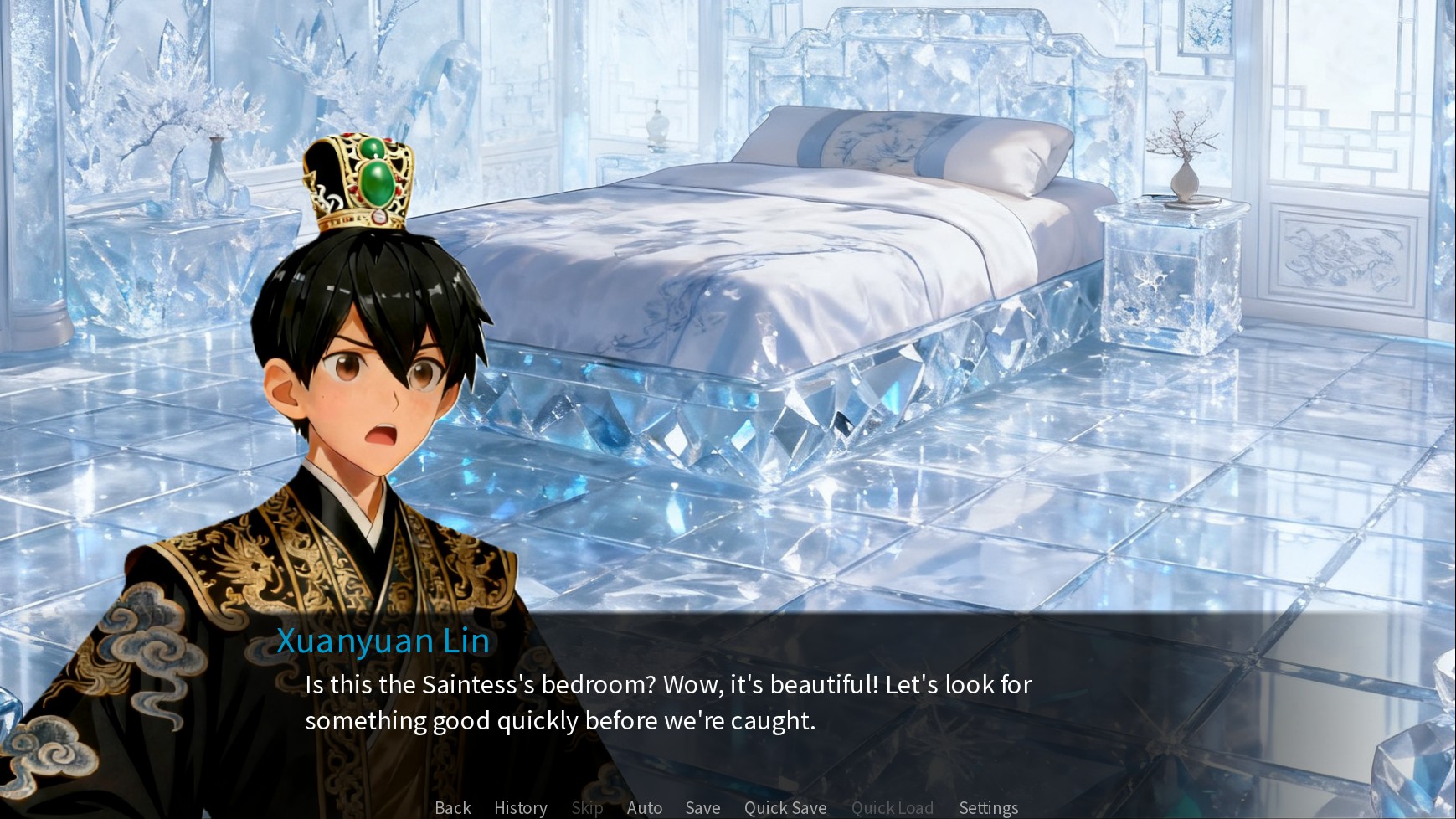
The four playable perspectives bring completely unique flavors to the table. If you choose the Xuanyuan clan, you will be playing as Xuanyuan Lin, the heir of the Xuanyuan Clan. He has a special talent for spiritual cultivation and managed to achieve high ranks of power even as a child. Because of this, he is much treasured by his elders, who constantly spoil him by fulfilling all his wishes. However, Lin uses his influence not for selfish gain but to protect those in need. Unfortunately, despite his pure heart, he is destined to have a tragic fate.
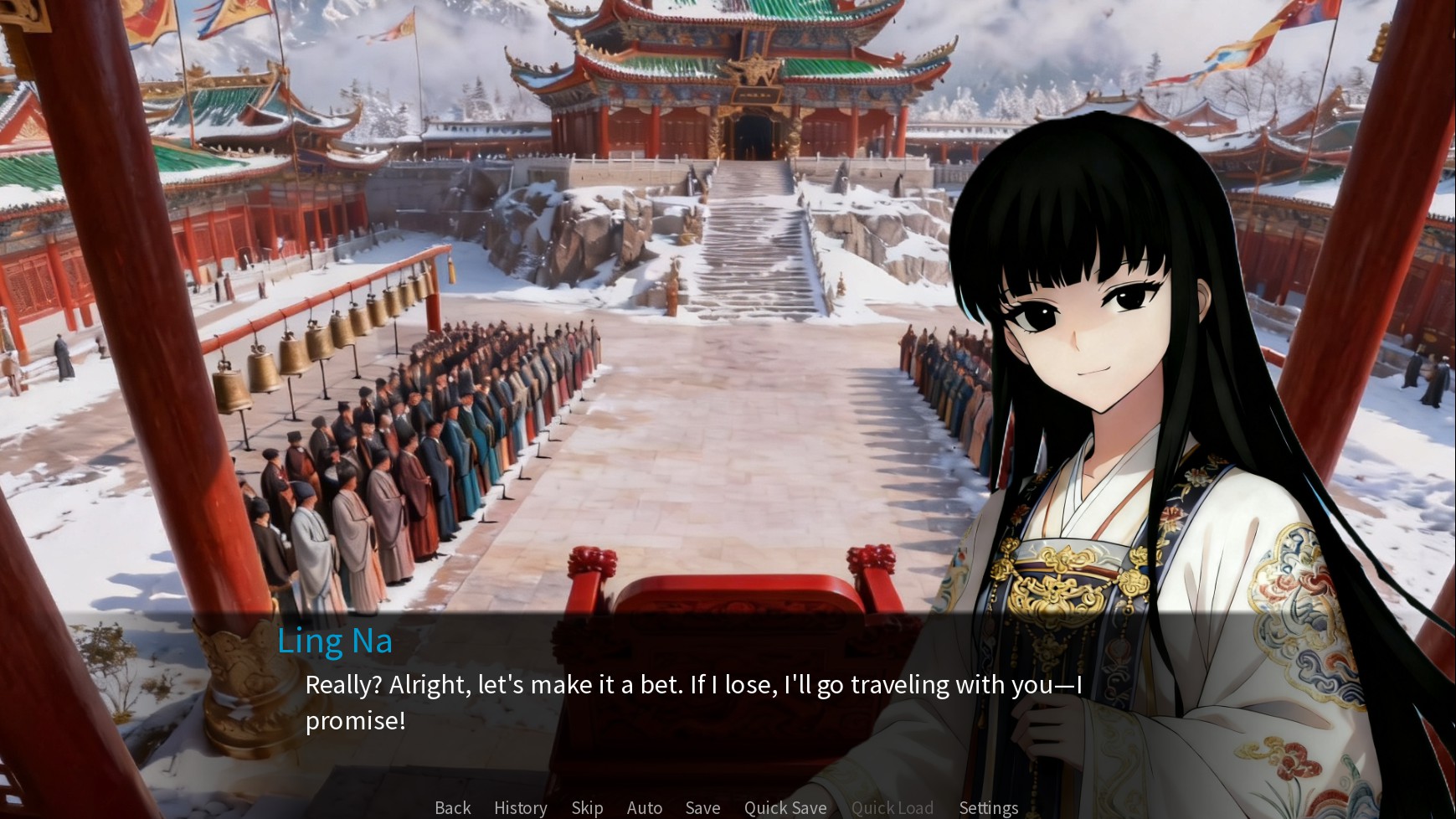
When choosing the Tiansheng Demon Palace route, you step into the shoes of Ling Na. She is the same age as Lin and matches him in power but stands as his exact opposite. She has a cold and cruel nature. She’s ambitious and power-hungry. She rules over her clan and the wider superpowered world with an iron fist.
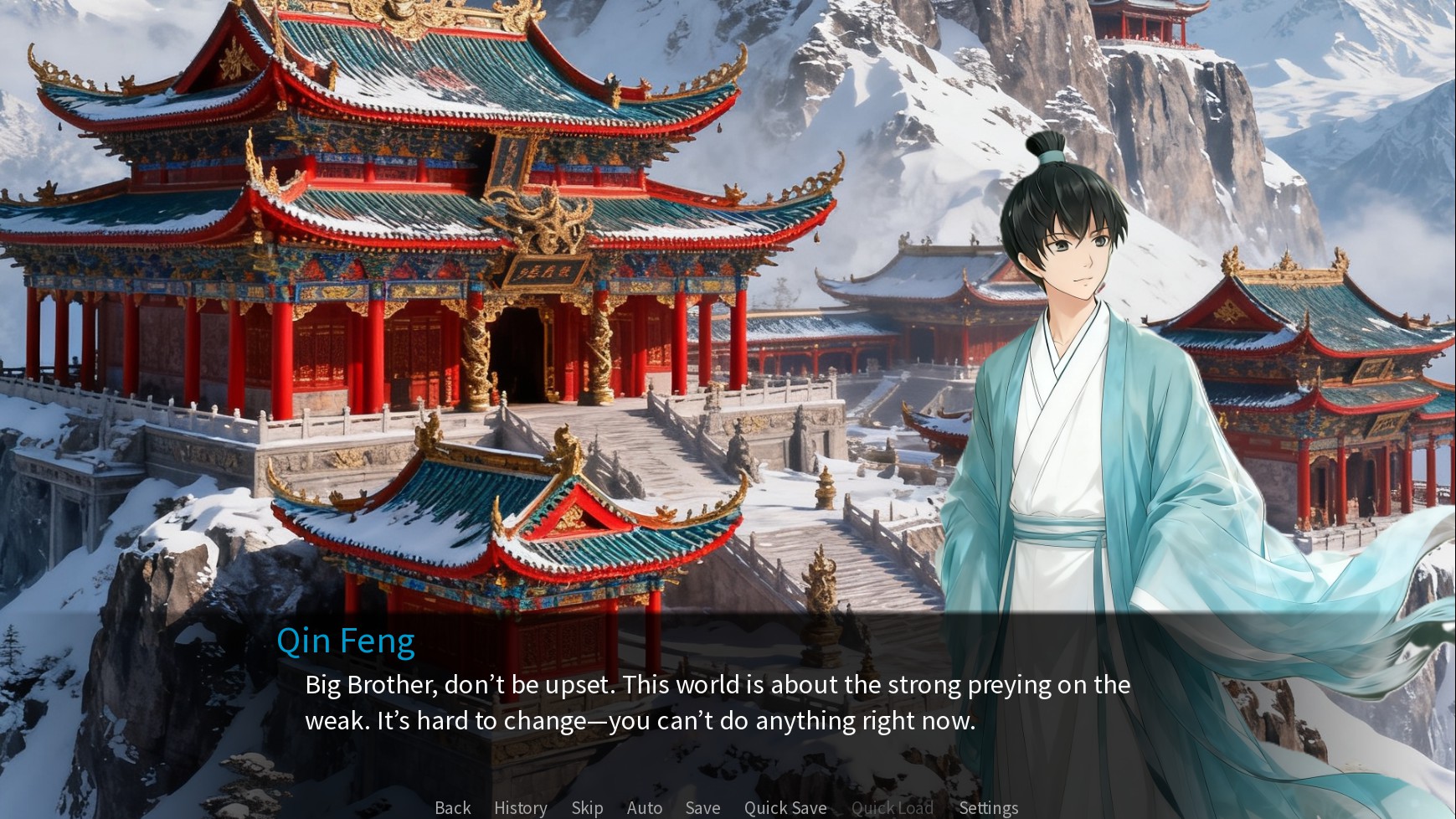
On the Qin route, you get to play as Qin Feng, the sole survivor of the Qin clan, which was massacred by the Xuanyuan clan. After Lin begs his elders to spare the boy’s life, Qin Feng becomes Lin’s closest friend and confidant and thus forms an unexpectedly deep bond with the one that is both his savior and, at the same time, supposedly his mortal enemy.
Though it is the shortest route, the Yi route is likely the most surprising one, as its main character only has a brief appearance in the other routes. However, it brings one of the more interesting plot twists of the story. Here you get to play as Yi Haocheng (Yeyou), an enigmatic child taken in by Ling Na as her personal slave.
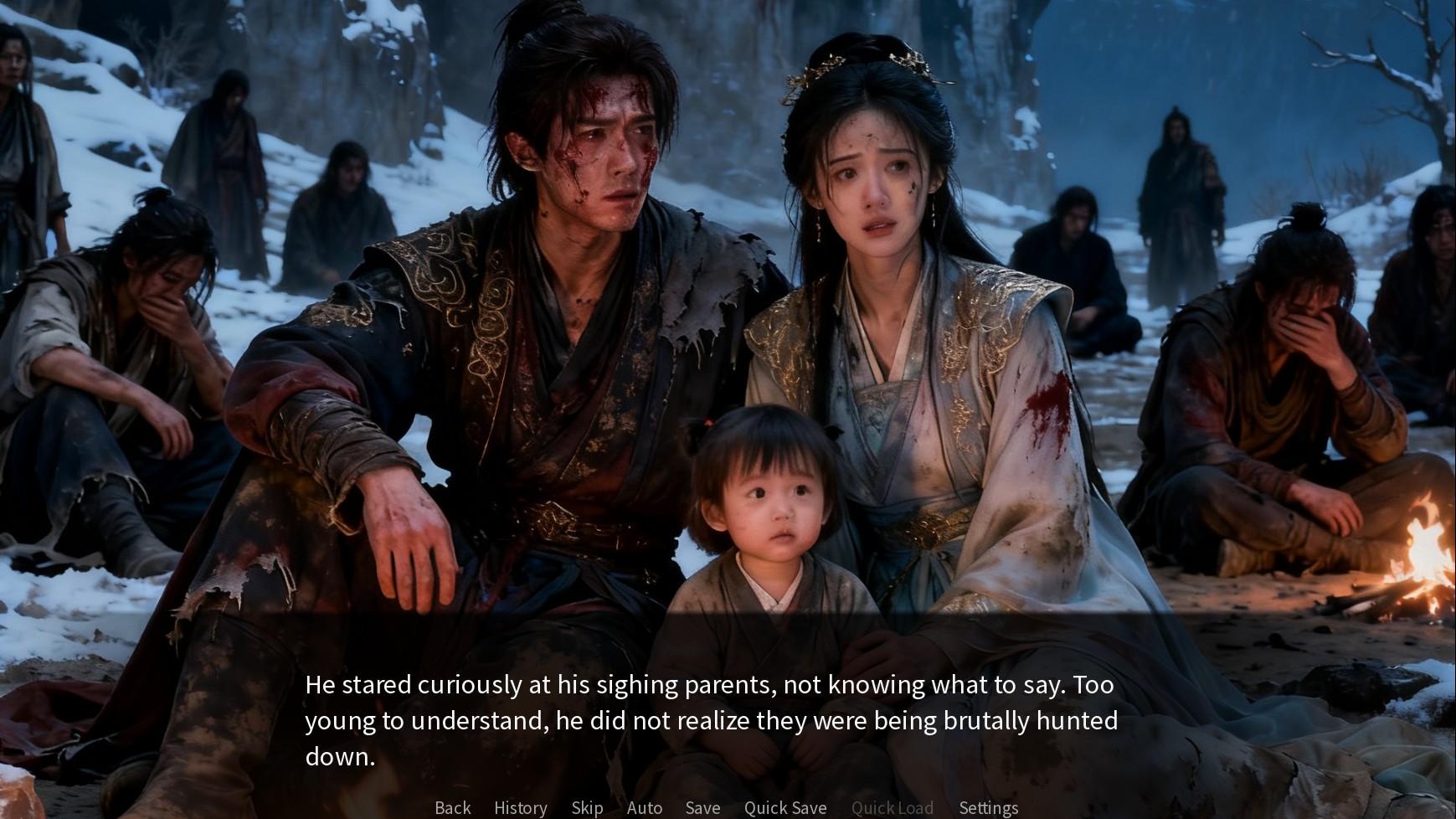
The most excellent aspect of this visual novel is the complete lack of an all-knowing view per route. Being locked into a single character’s restricted perspective / point of view amplifies the mystery and narrative tension. As you complete subsequent routes, you learn the characters’ backstories, and the unexplained plots encountered in previous routes receive explanations and closure. Seeing the same events play out from different angles sheds new light on character motivations and uncovers the true reasons behind the central conflict. The puzzle pieces start to click together, allowing you to deepen your understanding of the whole plot. For this reason, it is highly recommended to play the routes in the exact order listed on that initial choice.
The first half of the initial route starts out lighthearted and cozy. I was secretly hoping the plot would go into an enemies-to-lovers direction, where Xuanyuan Lin and Ling Na develop feelings for each other, despite them being rivals, especially since there are a few scenes that hint toward that. However, the game quickly sheds any bubbly expectations and takes a dark, fatalistic turn. The writing masterfully pivots to explore heavy, mature themes, like Lin’s tragic misplacement of trust, the deep isolation Ling Na faces as an authoritative ruler, and Qin Feng trying to balance his desire for vengeance and his loyalty to his friend.
Ultimately, Journey of Destiny: dependent origination is a beautiful passion project, with a story featuring deep characters and plenty of surprises. Beyond the game itself, the developer is incredibly open, regularly sharing behind-the-scenes snippets from his personal life or from the development phase (this is pretty much the only game for which I am tremendously excited to read the news feed). He is deeply appreciative of any attention this visual novel receives and remains highly communicative and accessible through emails. On top of that, he actively listens to player feedback and is committed to improving the game post-launch. He hopes to continue the story in sequel games, since this project functions beautifully as a prologue, despite already being a complete, full-fledged narrative on its own.