
Nomori
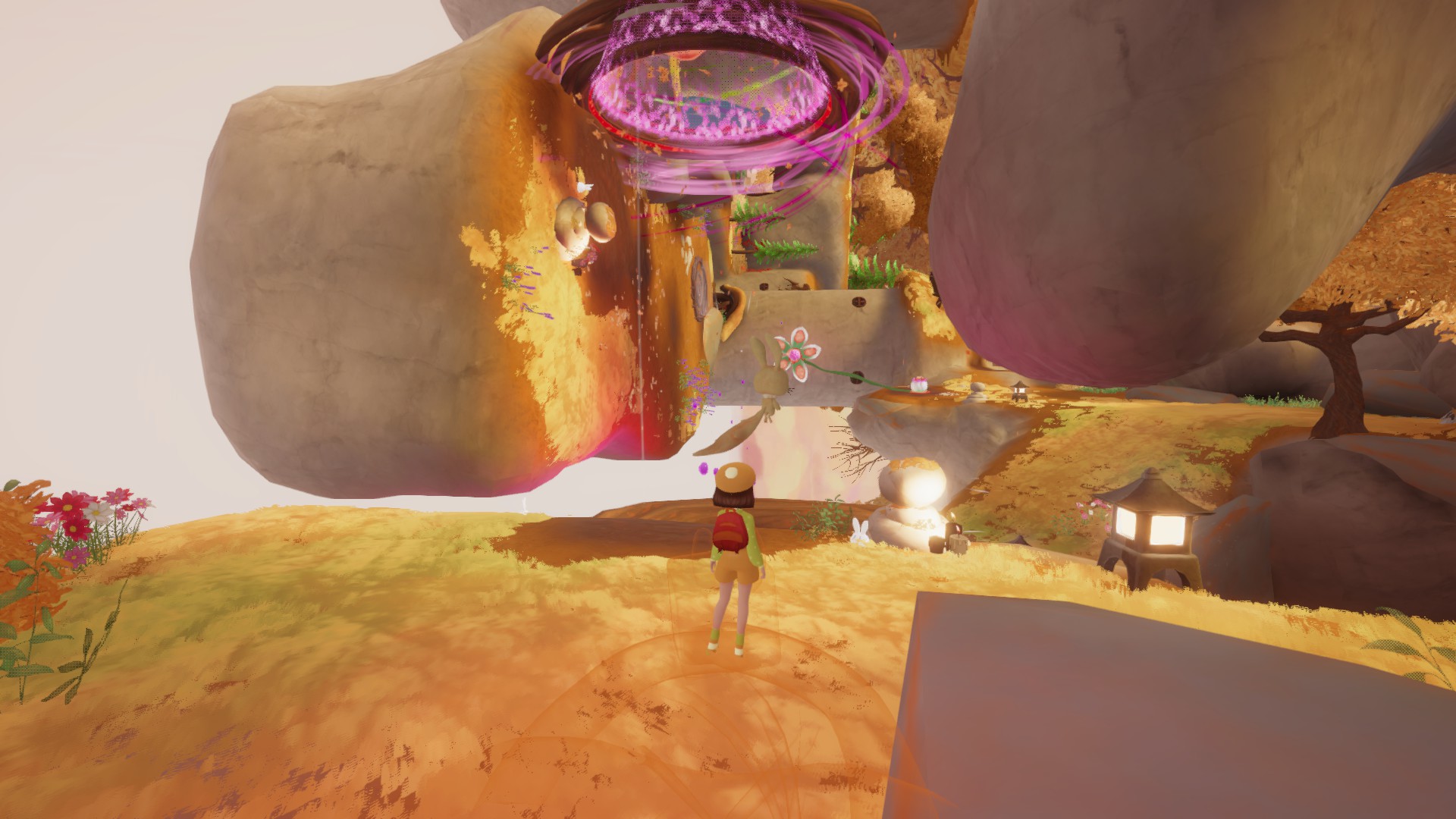
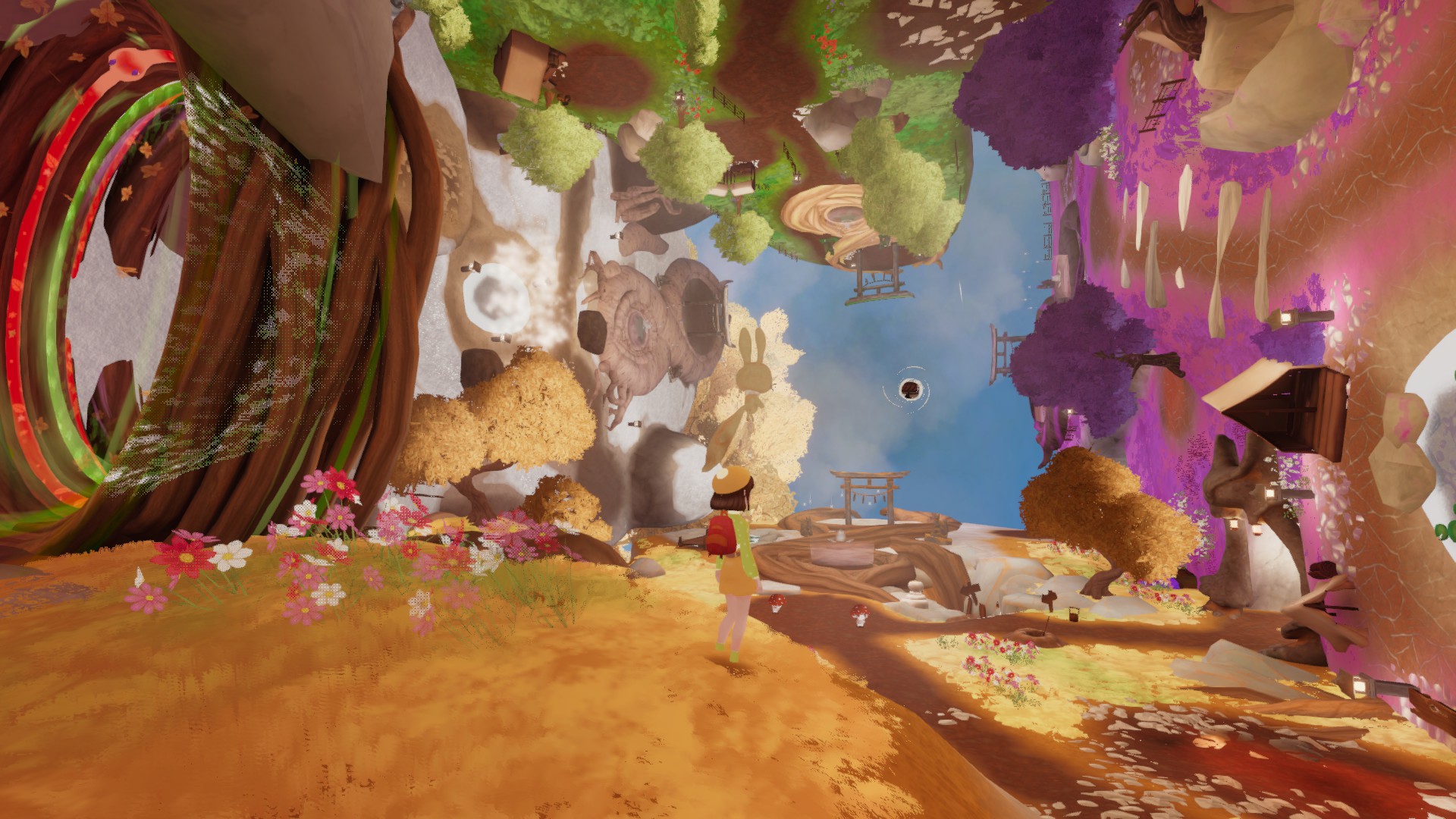
Nomori is a wonderful puzzle platformer game that borrows concepts from games like Portal or Antichamber. Its focus is set on solving puzzles with a shifted room perspective. You will need to rethink gravity and room orientation rather than platforming in a fixed space. Going through portals will shift the room orientation, a bit similar to the mechanic we all know so well from Portal, while using adorable bunny-shaped cubes (reminiscent of the companion cubes in Portal) is needed to bridge gaps between platforms or break other obstacles. It’s a creative approach to platforming, but one that takes a while to get used to.
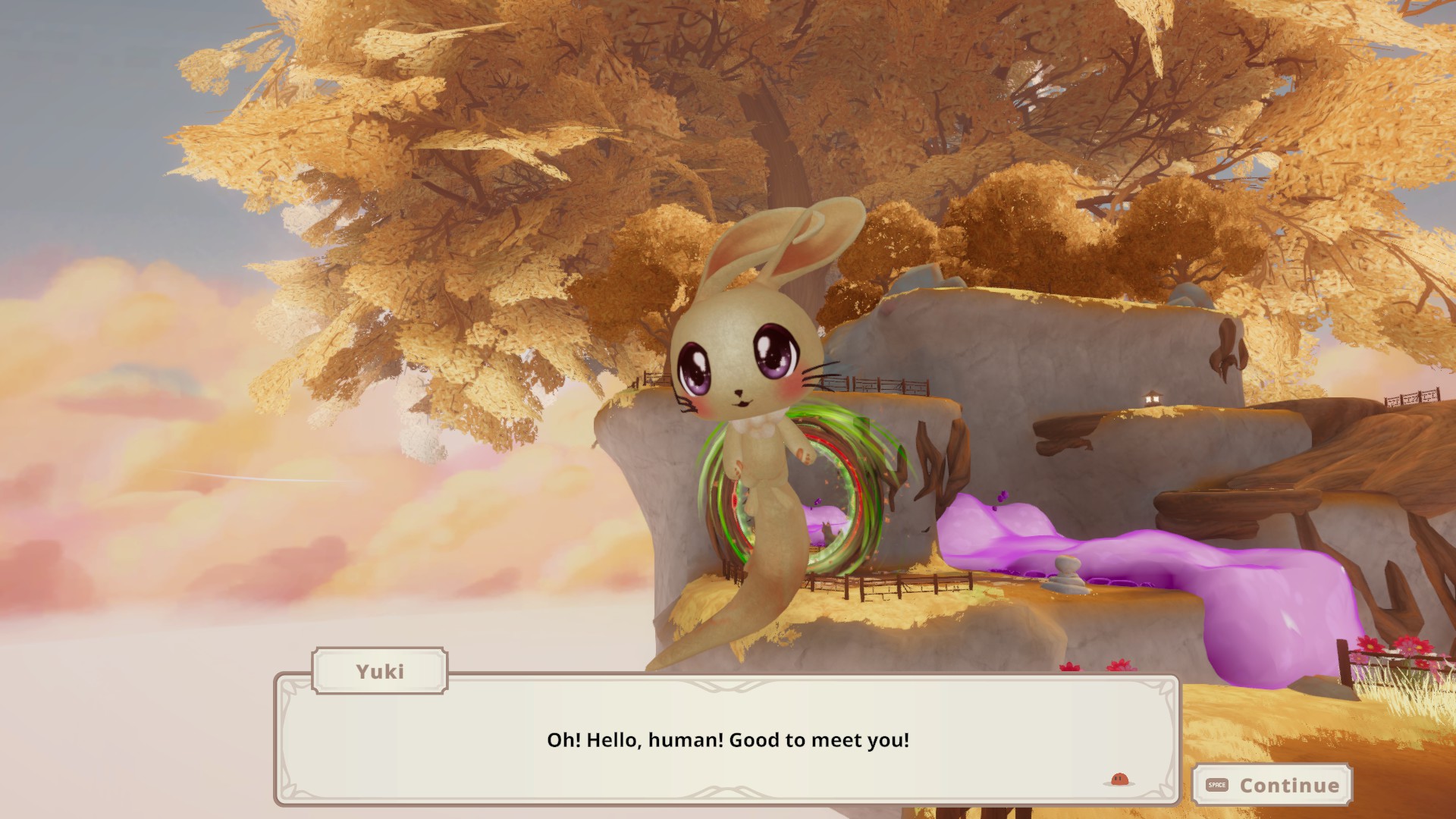
Story-wise, you play as Kiko, a young girl who loves solving puzzles. She is suddenly transported into a magical world called Nomori and she tries to find her way back to her grandma through these levels. The art style is very colorful and cozy, reminiscent of Studio Ghibli’s whimsical worlds. Where the game does not shine as much is its storytelling, which feels paper-thin, with characters who are not particularly memorable.
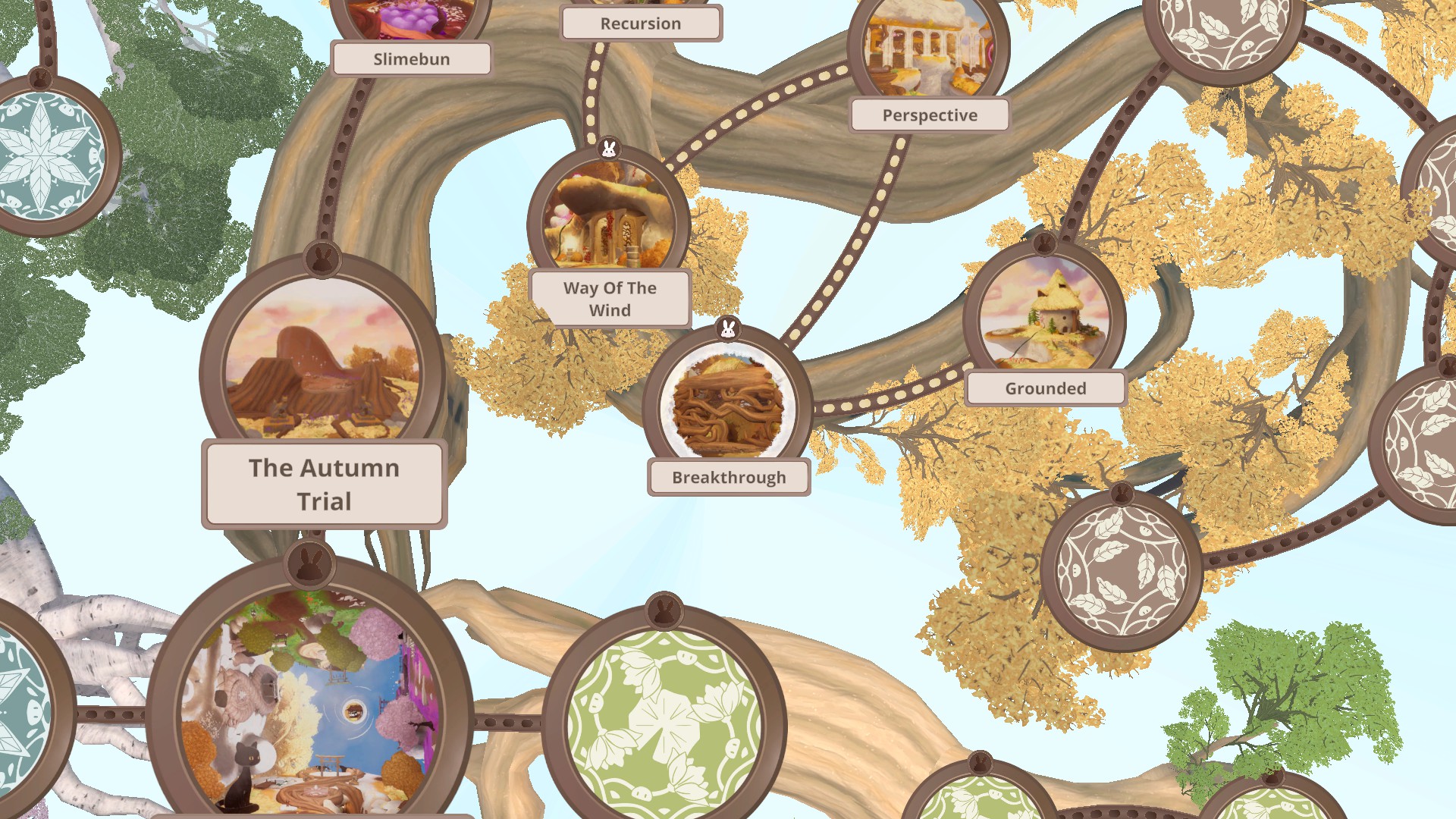
The levels are split into four seasons. They unlock sequentially, and there is a main hub you can access from any level to see what is currently open. The first season introduces the core mechanics and teaches you how to think through the puzzles, but it does not give you much breathing room to internalize them, since almost every stage introduces something new.
In each level, you can collect multiple mushroom-like collectibles. These are easy to spot thanks to an exclamation mark over them, but reaching them brings an extra challenge. They require you to shift perspectives in unusual ways and combine multiple mechanics. Sadly, the hub only shows whether you found at least one or all of them, without telling you how many remain. Because these mushrooms are required to unlock later levels, you cannot ignore them. Worst of all, if you replay a stage to grab what you missed, you have to reach the exit again for your progress to count.
Fortunately, you can revisit levels at any time. Checkpoints are frequent and save the positions of your cubes, saving you from painful backtracking if you accidentally fall off the edge. You can also use these checkpoints as a fast teleporter back to your previous setup whenever needed.
Difficulty-wise, this is not an easy ride. Beyond bending your spatial reasoning, some puzzles are quite intricate and demand serious patience. Even though the art style might look like a cozy title, it is definitely not a relaxing one.
As for the audio, the soundtrack is pleasant. The character dialogue consists of vocal sound effects rather than actual speech, which grated on my nerves after a while, though plenty of other players seem to enjoy that style.
In the end, Nomori is an easy recommendation for those that like some brain-teasing puzzling that plays on perspective and gravity and don’t mind that its thin story and collectible tracking hold it back slightly. Though, if you do want to test your spatial reasoning, make sure to dive into the game armed with lots of patience.